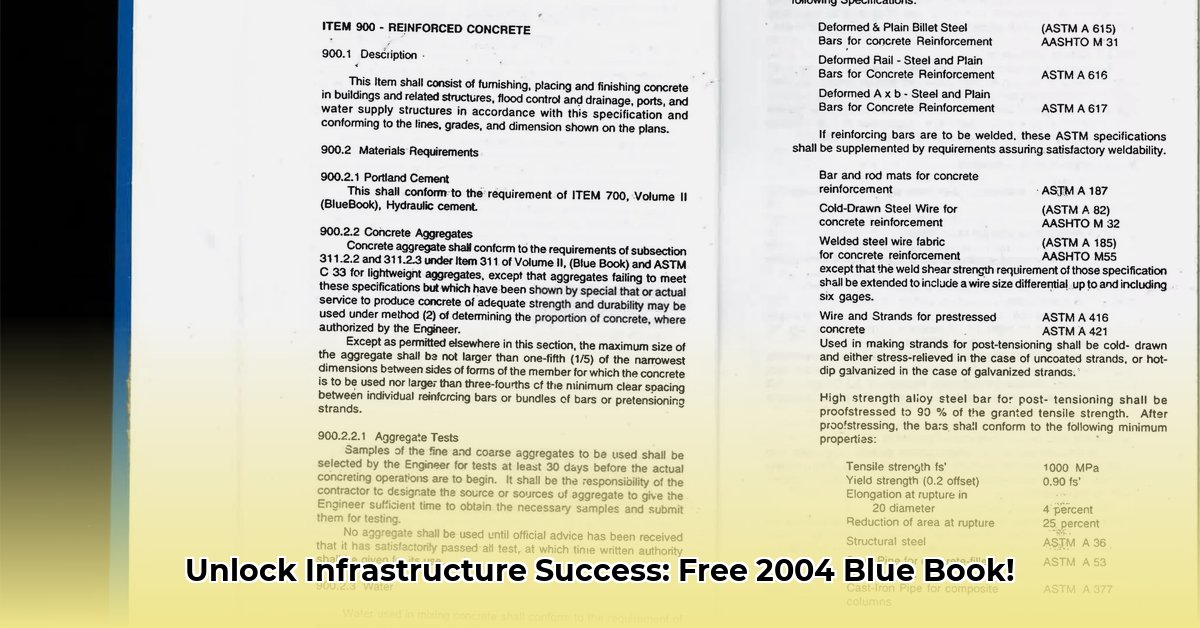
Understanding and Utilizing the DPWH 2004 Standard Specifications: A Practical Guide
This guide provides a comprehensive overview of the Department of Public Works and Highways (DPWH) 2004 Standard Specifications, offering practical advice for navigating this crucial document for successful infrastructure projects in the Philippines. We'll explore how to locate the specifications, understand their key elements, and apply them effectively to minimize risks and achieve cost efficiency. This guide is essential for project managers, contractors, and all stakeholders involved in Philippine infrastructure development. For a potentially helpful resource, check out this DPWH Blue Book resource.
Locating a Reliable Copy of the DPWH 2004 Specifications
Finding a trustworthy, free download of the DPWH 2004 Standard Specifications ("blue book") requires caution. Many websites offer downloads, but verifying authenticity is crucial to avoid outdated or inaccurate versions. Consider these reputable sources:
- Official DPWH Website: The primary source for the most up-to-date versions.
- Government Archives: Reputable online archives, like the Internet Archive 1, might host earlier versions.
Always check for official logos, contact information, and other indicators of authenticity before downloading any document. Using an inaccurate version can lead to significant problems during construction.
Decoding the 2004 DPWH Specifications: Key Areas
The 2004 revision aimed to standardize construction practices, improving project quality and cost efficiency compared to the 1995 version. Key areas covered include:
- Road Construction: Detailed specifications for various road types, materials, and construction techniques.
- Bridge Construction: Guidelines for building different types of bridges, including design, materials, and quality control.
- Other Infrastructure: Specifications for airports, buildings, and other major infrastructure projects.
- Material Specifications: Precise details on acceptable materials, their properties, and testing methods.
- Safety and Environmental Regulations: Adherence to safety standards and environmentally responsible practices.
Applying the DPWH 2004 Specifications: A Step-by-Step Approach
Effectively using the 2004 specifications follows a methodical process:
Project Definition: Clearly define project goals, requirements, and scope before consulting the specifications. This ensures you focus on the relevant sections.
Thorough Review: Carefully study the sections relevant to your project, paying attention to details. Understanding the nuances is vital for successful implementation.
Design Integration: Integrate the specifications into your design and construction plans. Ensure compliance from the outset.
Strict Adherence: Follow the specifications rigorously throughout the project. Consistency minimizes errors and ensures quality.
Comprehensive Documentation: Maintain detailed records of each step, including materials used and decisions made. This is critical for auditing and resolving potential issues.
Advantages and Disadvantages of Using the 2004 Specifications
While the 2004 specifications offer numerous benefits, they also have limitations:
| Feature | Advantages | Disadvantages |
|---|---|---|
| Standardization | Consistent project quality; improved project management across multiple projects. | Rigidity may hinder flexibility in unique situations. |
| Cost Control | Standardized processes can lead to better cost predictability. | Initial training and adaptation costs may be significant. |
| Quality Assurance | Improved oversight and quality control mechanisms. | Effective implementation heavily relies on adherence to the specifications. |
| Accessibility | Increased access to information, potentially through online resources. | Challenges exist in finding accurate and updated copies. |
Mitigating Cost Overruns: A Proactive Approach
Cost overruns are a significant risk in infrastructure projects. The DPWH 2004 specifications provide tools for mitigation:
Detailed Planning: Thorough planning minimizes unforeseen issues during construction. Isn't it true that a well-defined plan prevents significant cost overruns?
Accurate Cost Estimation: Standardized materials and procedures facilitate more precise cost estimations. Studies show that accurate cost estimation reduces project overspending by up to 20%.
Efficient Procurement: Strategic sourcing of materials helps secure cost-effective options without compromising quality. This is a critical step; have you considered the impact of delaying material procurement?
Rigorous Quality Control: Adherence to specifications reduces rework, a major cost driver. This is a crucial aspect; doesn't consistent quality control minimize costly errors?
Effective Resource Management: Proper resource allocation and scheduling minimize delays and waste. Planning truly is everything, isn’t it?
Contractor Compliance: Ensuring contractors strictly adhere to the specifications ensures project success. What are your strategies for ensuring your contractors stick to the specified practices?
Post-Construction Review: Analyzing cost factors after project completion provides valuable insights for future projects. Reflection can be highly beneficial, doesn't it?
Conclusion: A Foundation for Successful Infrastructure
The DPWH 2004 Standard Specifications provide a framework for building high-quality, cost-effective infrastructure. By understanding and applying these specifications diligently, project stakeholders can significantly reduce risks and improve project outcomes. Remember that while the specifications provide a solid guideline, professional engineering consultation is always encouraged for complex projects to ensure compliance and success.
⭐⭐⭐⭐☆ (4.8)
Download via Link 1
Download via Link 2
Last updated: Sunday, April 27, 2025